Steel Casting & Rolling
A heat doesn't wait. Acervas keeps the fix that clears the caster.
Steel runs heat-to-coil as one chain: EAF or BOF, ladle, tundish, caster, reheat furnace, the hot and cold mills, the coiler. The caster is the pinch point: the steel above it is on a clock, the mill below it depends on a steady strand. When the caster stops, both ends are in trouble at once, and the answer that gets it sequencing again is the most valuable thing on the floor.
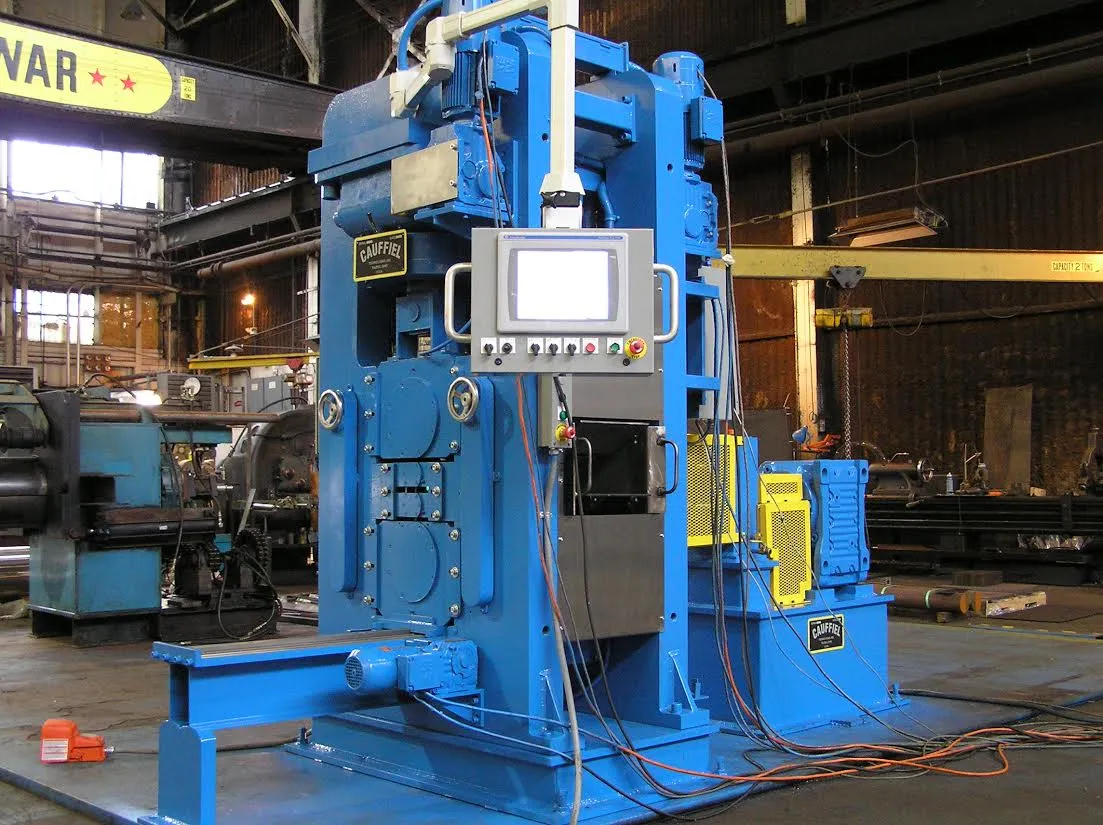
It's the back of a night shift. The caster stalls: a mould-level oscillation the operator can't settle, a withdrawal-roll drive that won't pull clean. The ladle on the turret is full and cooling, the tundish is draining, and the reheat furnace and hot mill below are about to run empty. Somebody on a previous shift saw this exact behaviour and cleared it. That somebody is asleep, retired, or three plants away. So the strand sits while the floor relearns a fix that already exists, with a breakout one bad minute away.
That stall isn't a repair. It's a search. And on a casting and rolling line, the heat above the caster turns to scrap while you search, and the mill below it eats into the day's tonnage starving for feed.
Why casting and rolling punishes a lost fix
A continuous caster is the least forgiving machine in the works. The mould, the secondary cooling sprays and the withdrawal are tied together on a sequence liquid steel will not renegotiate, and a stall risks a breakout that takes the strand out for hours. Lose the caster and the heat above it is scrap and the reheat furnace and mill below it run empty. The cost of a stop is the whole chain, not one stand, and it climbs into the tens of thousands an hour before you count the relight, the reseed, and the time it takes to get back to grade.
The repair is rarely the hard part. The diagnosis is. Most sequence breaks on a mature casting and rolling line are not new: they are a fault someone already worked out, on another shift or another line, whose answer never made it off that shift.
Your CMMS logged that the strand stopped. It has never once logged how the last crew got it casting again.
The kit a single caster fix has to know
A steel mill is multi-OEM from the EAF tap to the coiler: the furnace, the caster and the rolling stands rarely come from one supplier. Acervas indexes every fix against the exact machine, make, model and variant, so a search on a breakout-detection fault or a downcoiler problem lands on your caster and your mill, not a generic answer.
- EAF & BOF steelmaking
- TenovaDanieliSMS groupPrimetals Technologies
- Ladle furnaces & tundish metallurgy
- DanieliSMS groupTenovaPrimetals Technologies
- Continuous casters: slab, bloom & billet
- Primetals TechnologiesSMS groupDanieli
- Reheat & walking-beam furnaces
- TenovaFivesDanieliAndritz Metals
- Hot strip & plate mills
- Primetals TechnologiesSMS groupDanieli
- Cold rolling, tandem & reversing mills
- SMS groupPrimetals TechnologiesDanieliAndritz Metals
- Coilers, downcoilers & strip processing
- SMS groupPrimetals TechnologiesDanieliAndritz Metals
Where the fix lives now, and where it should
Right now the answer to a recurring mould-level fault or a sticky downcoiler lives in the heads of the fitters who have run the line longest. It leaves on the next shift, and it walks out the door the day they retire. A logbook only helps if someone reads it; a work order tells you the line went down; what the fitter actually did (check the wrapper-roll pressure, watch the pinch-roll gap) to bring the strand back is a note nobody writes up in full at 2am, and nobody can find later.
Acervas captures the fix the moment it's made: voice, photo or text, on the floor, in seconds, while the strand is still warm in someone's memory. The next time that fault shows on any shift or line, the last fix is the first thing the operator sees. And because the same Primetals casters and SMS mills run in steelworks you'll never set foot in, a fix logged at one company can answer the same fault at another, anonymised: company, plant, line and the name of whoever solved it are stripped out before anything travels. You opt in, you give and get, and your own plants' fixes always rank first. Acervas isn't a CMMS and doesn't replace one: it's the knowledge layer that sits on top of the one you already run.
So, a few honest questions
- –When your last bad caster stall cleared at 3am (a mould-level oscillation, a withdrawal-roll drive, a near breakout), where did that fix end up: the CMMS, or one fitter's head?
- –If that fitter handed in their notice tomorrow, how much of your caster and your hot mill walks out with them?
- –Of this quarter's sequence breaks, how many were genuinely new, and how many had been solved before, just not by whoever was on shift when the strand went down?
If those stung a little, that's the gap. Acervas captures the fix the moment it's made and hands it to the next person who needs it: on your line, or on the same caster in a steelworks you'll never set foot in.
Questions engineers ask first
- Does it work with our existing CMMS?
- Yes. Acervas runs alongside it: your CMMS stays the system of record, Acervas is the knowledge layer on top, reading your machine hierarchy and pointing each fix back to the work order.
- Our line mixes furnace, caster and mill OEMs. Does that matter?
- No, that's the point. Acervas indexes fixes against make, model and variant, so a Primetals caster, a Tenova reheat furnace and an SMS coiler each carry their own searchable history instead of one undifferentiated pile.
- Are our fixes shared with other steelmakers?
- Pooled by machine and anonymised. The make and model travel the network; your company, plant, line and people don't. You choose whether to join, and you can leave.
- How fast before it's useful on the floor?
- Fixes start being captured in the first week, and the answers compound as your team logs them, and as other plants on the same casters and mills do too.
See how Acervas works with your CMMS, or talk to us about your line.
Stop losing knowledge. Start building on it.
Tell us about your plants. We'll onboard your first one free for 90 days: your engineers are capturing knowledge inside a week.