Chemicals & Petrochemicals
In a continuous chemical plant, the trip is quick. Working out why takes the shift.
A continuous chemical or petrochemical plant runs on a balance you hold by the hour: reactor, column train, compressors and pumps all feeding each other. Tip it and the unit trips. The hard part was never the repair. It was working out why, again, at 3am, with the answer already sitting in a head that's asleep or three sites away.
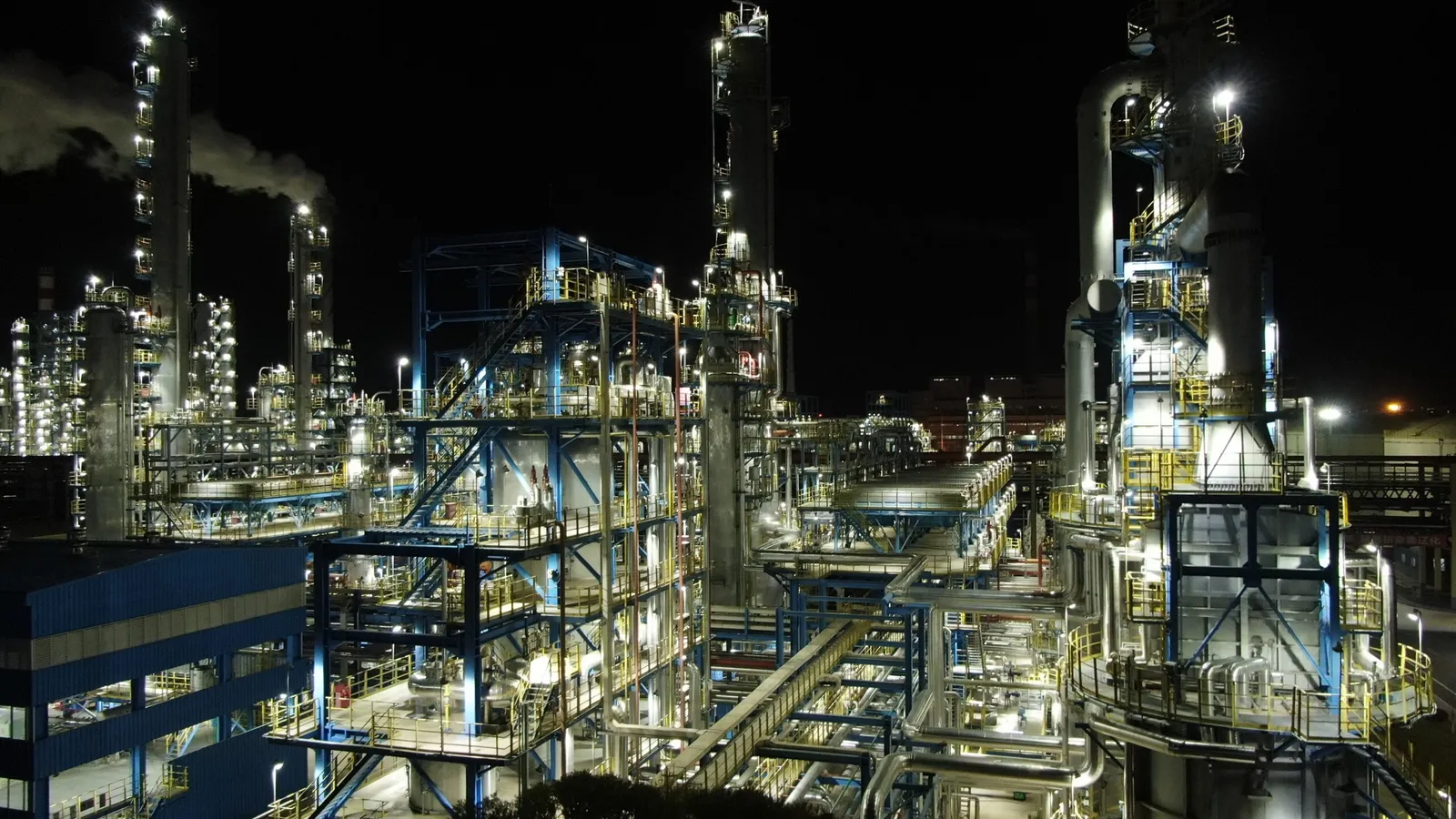
The board operator is holding the unit on a knife edge. Column dP has been creeping all shift, the reflux is fighting them, and the rate is already pulled back. Then a process pump loses a seal, the loop backs up, and the trip cascades through the train before anyone can catch it. Now the column is flooded, the compressor's on minimum flow, and the flare is lit.
The repair is the small part: a seal, a valve, a calibration. The expensive part is the next four hours, spent rediscovering what caused the high dP and the recurring trip on the same loop. Someone already worked this out. Just not whoever's on shift tonight.
Why a continuous process plant punishes a lost diagnosis
A continuous unit is unforgiving by design. Reaction, separation and compression feed each other, so a seal failure on a process pump or a surge on a compressor doesn't stall one machine; it forces a rate cut or a full trip across the train. The cost of a stop is the whole unit, and it climbs into the tens of thousands an hour before you account for off-spec product, flare losses and a slow, careful restart.
On a mature train the trips are rarely new. The high column dP, the recurring fault on the same loop, the compressor that surges on the same cold start: these have been seen and solved before. The plant doesn't lack the answer. It lacks a way to put the answer in front of the person staring at the alarm tonight.
Your CMMS logged that the unit tripped. It has never once logged how the last crew talked it back up.
The kit one fix has to know cold
A process train is multi-OEM from the reactor to the control room: Flowserve pumps, Sulzer columns, Atlas Copco compressors, Fisher valves, a Honeywell or Emerson DCS tying it together. Acervas indexes every fix against the exact machine, make, model and variant, so a search lands on the kit in front of you, not a generic petrochemical answer.
- Reactors, mixers & agitators
- EkatoChemineerSPX FLOW (Lightnin)De Dietrich
- Distillation columns & internals
- Sulzer ChemtechKoch-GlitschRaschigRVT Process Equipment
- Centrifugal & process compressors
- Atlas CopcoSiemens EnergyMAN Energy SolutionsElliott (Ebara)Baker Hughes
- Process pumps
- FlowserveKSBSulzerITT GouldsRuhrpumpen
- Heat exchangers
- Alfa LavalKelvionSPX FLOW (APV)API Schmidt-Bretten
- Control valves
- Emerson (Fisher)SamsonFlowserveIMI (CCI)Valmet (Neles)
- DCS, PLC & process control
- HoneywellEmerson (DeltaV)SiemensYokogawaABB
Where the fix lives now, and where it should
Right now the diagnosis lives in the heads of the operators and fitters who've held the unit longest. It leaves on the next roster, and it walks out the gate the day they retire. A notification tells you the loop tripped; it doesn't tell you the panel operator chased it to a sticking anti-surge valve and what they did about it.
Acervas captures the fix the moment it's made: voice, photo or text, at the unit, in the operator's own words, while the cause is still in front of them. Next time that fault shows on any shift or unit, the last fix is the first thing the next person sees. The long cold troubleshoot on a compressor surge becomes "check the anti-surge valve calibration," handed back before the rate cut turns into a trip.
And because the same Atlas Copco compressors, Sulzer columns and Flowserve pumps run in plants you'll never walk through, a fix logged at one company can answer the same fault at another, anonymised. The make and model travel the network; your company, site, unit and the name of whoever solved it are stripped out before anything moves. You opt in, you both give and get, and your own plants' fixes always rank first. Acervas sits on top of the CMMS you already run, not in place of it.
So, a few honest questions
- –Last time a process pump seal tripped the train at 3am, where did the diagnosis end up: the work order, or the operator's head?
- –When the same compressor surge or high column dP comes back next quarter, how does the crew on shift find out it's been chased down before?
- –When your most senior board operator hands in their notice, how much of the unit's troubleshooting walks out with them?
- –Of last quarter's trips, how many were genuinely new, and how many had been solved before, just not by whoever was on the panel?
If those landed, that's the gap. Acervas captures the fix the moment it's made and hands it to the next person at the panel: on your unit, or on the same machine at a plant you'll never set foot in. Start with one train and prove it on a pilot.
Questions engineers ask first
- Does it work with our existing CMMS?
- Yes. Acervas runs alongside it: your CMMS or asset system stays the system of record, Acervas is the knowledge layer on top, reading your equipment hierarchy and pointing each fix back to the work order or notification.
- Our train mixes OEMs across every unit. Does that matter?
- No, that’s the point. Acervas indexes fixes against make, model and variant, so a Flowserve pump, a Honeywell DCS loop and a Sulzer column each carry their own searchable history instead of one undifferentiated pile across the plant.
- Are our fixes shared with other chemical and petrochemical plants?
- Pooled by machine and anonymised. The make and model travel the network; your company, site, unit and people don’t. You choose whether to join, and you can leave.
- How fast before it’s useful on the floor?
- Fixes start being captured in the first week, and the answers compound as your operators log them, and as other plants on the same machines do too.
See how Acervas works with your CMMS, or talk to us about your line.
Stop losing knowledge. Start building on it.
Tell us about your plants. We'll onboard your first one free for 90 days: your engineers are capturing knowledge inside a week.